Attica and Athens
Athens and its peninsula: three days in the capital, excursions to Sounion, Marathon and Aegina, the logical starting point for the Peloponnese and the Cyclades.
Attica forms the southeastern tip of mainland Greece, a 3,800 km² peninsula bordered by the Saronic Gulf to the west and the Aegean Sea to the east. Athens occupies its central basin, encircled by four mountains: Hymettus, Penteli, Parnitha and Eghaleo. This geographical depression explains the summer heat trapped at ground level and the particular quality of light in the late afternoon on the Acropolis limestone. From our agency in the capital, we organize most stays in Greece around this anchor point, whether travelers spend two days or five here.
Athens has 3.1 million inhabitants in its metropolitan area, nearly one-third of Greece's population. Yet the historic center fits into a small space: you can walk through Plaka, Monastiraki, Psyrri and Thissio in a morning. Each neighborhood retains distinct identities. Koukaki, at the foot of Philopappos Hill, has become a cherished residential district over the past decade for its neighborhood tavernas and proximity to the Acropolis Museum. Exarcheia, long associated with the anarchist and student scene, now hosts bookstores, vinyl bars and creative cuisine around its namesake square. Pangrati, more bourgeois, arranges its alleys around the Panathenaic Stadium, the marble venue that hosted the first modern Olympic Games in 1896.
Ancient heritage structures the visit but does not exhaust it. The Acropolis and its museum require half a day, the Ancient Agora and the Stoa of Attalus another, the Ceramicus and its cemetery site a quieter morning. The National Archaeological Museum on Patission Street houses the Mask of Agamemnon, the Akrotiri frescoes and the Antikythera mechanism: plan a minimum of three hours. But Athens also lives through its working-class cuisine, the Varvakios markets and its humble specialties: souvláki for 3.50 euros at Kostas on Pentelis Street, cheese bougatsa in the morning, loukoumades drizzled with honey and cinnamon. The Metaxourgio district has concentrated a bistronomic scene in recent years that reworks the products of the neighboring Peloponnese.
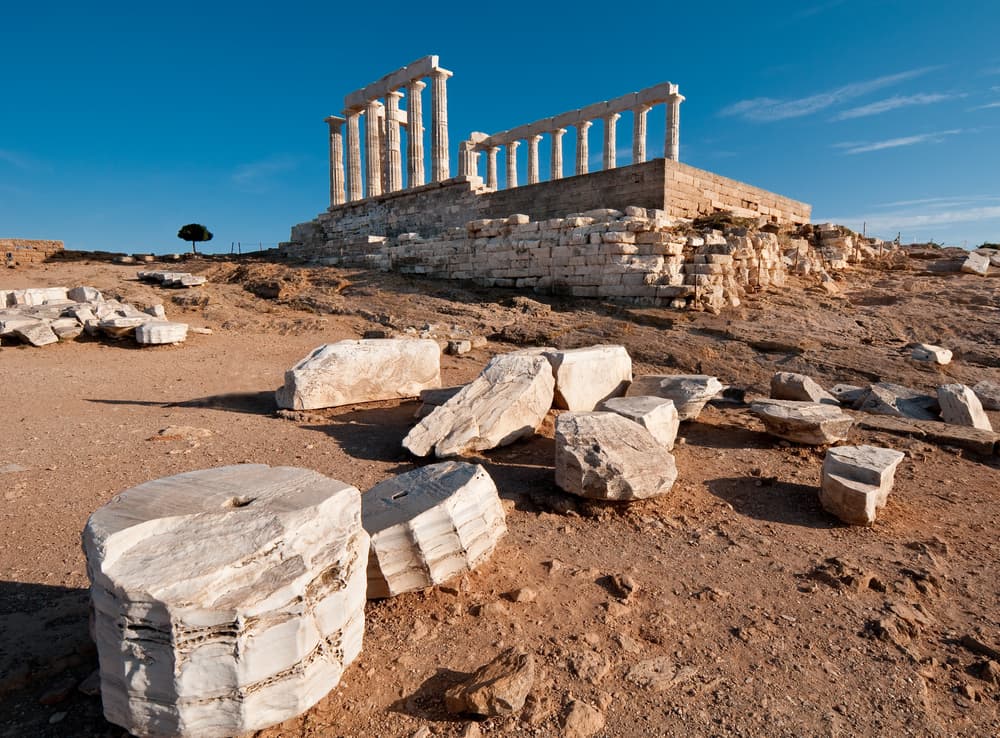
Outside the city, Attica unfolds along three routes that we offer as day excursions. To the south, the Apollon Coast stretches along the sea for 70 kilometers to Cape Sounion. The Temple of Poseidon, dated to 444 BC, crowns a cliff 60 meters above the Aegean. The sunset there is popular, but the site remains manageable, away from Cycladic crowds. The beaches of Vouliagmeni, Varkiza and Legrena offer convenient swimming on a day trip from the center. To the east, the Marathon Plain evokes the battle of 490 BC against the Persians; the tumulus of the fallen Athenians is visited in thirty minutes, the local museum completes the picture. To the north, the Sanctuary of Eleusis, now designated European Capital of Culture, preserves the remains of Demeter's mystery cult.
The island of Aegina, accessible in 40 minutes by fast ferry from Piraeus, extends the region toward the Saronic side. Its Temple of Aphaia, contemporary with the Parthenon, and its irrigated pistachio groves offer a day of escape without requiring archipelago logistics. Hydra and Spetses, further south, require an overnight stay to grasp their rhythm. Our team frequently combines two days in Attica with a night in Hydra before heading to the Peloponnese via the Corinth Bridge.
To Discover
The Acropolis outside peak hours. Entry at 8am via the east gate, less crowded, then descent toward the Areopagus and Pnyx Hill from which you overlook the Agora without the crowds. Allow three hours including the Acropolis Museum below.
Neighborhood tavernas in Koukaki and Pangrati. Mezze dinner in a family taverna on Veikou Street or around Varnava Square: homemade tarama, baked gigantes beans, grilled octopus over coals, retsina wine served by the jug.
Cape Sounion in late afternoon. Coastal route via Glyfada and Vouliagmeni, arrival around 5pm at the Temple of Poseidon. The local marble Doric columns take on an orange hue an hour before sunset.
Aegina island as a day trip. Ferry from Piraeus, fish lunch in the port of Perdika, visit the Temple of Aphaia perched at 160 meters, return in late afternoon. No luggage to carry.
National Archaeological Museum. Greece's most comprehensive collection covering the prehistoric and classical periods: Mycenaean treasures, archaic kouroi, Antikythera bronzes. Three hours for a thorough visit.
When to Visit
The most comfortable months to visit Athens and Attica are April, May, September and October, with daytime temperatures between 18 and 27°C and ideal light for photographing sites. July and August regularly exceed 35°C, with peaks at 40°C during heat waves that have intensified since 2021. During these two months, we systematically shift open-air site visits to before 10am or after 5:30pm, with the Acropolis now closing midday during official heat alerts.
Winter remains mild, between 10 and 15°C from December to February, with moderate rainfall (about 60mm per month) and fine sunny windows. It is an underestimated season for visiting museums and archaeological sites without crowds. The sea remains cool, 15 to 17°C, but swimming becomes feasible again from mid-May at 19°C, then 24 to 26°C from July to September.
Practical Advice
We recommend three full days for Athens itself, enhanced by one day per Attica excursion (Sounion, Aegina, Marathon-Eleusis). Eleftherios-Venizelos International Airport, 33 kilometers east of the center, is connected to the city center in 40 minutes by Metro Line 3 or by fixed-rate taxi at 40 euros (54 euros at night). Piraeus, the main port for the Cyclades, Saronic Gulf and Crete, is reached by metro from Monastiraki in 25 minutes.
Attica is the logical starting point for a mainland Greece itinerary. We frequently combine it with the Peloponnese (Nafplio 1 hour 45 minutes away), with the Cyclades (ferry from Piraeus or Rafina, 2 to 5 hours depending on the island), or with Northern Greece and Epirus via domestic flight Athens-Ioannina. Hotel comfort levels range from carefully designed guesthouses to 5-star addresses in Plaka, Syntagma and the Athenian Riviera. The destination suits both museum-loving contemplatives and families with teenagers, provided you adjust pace to summer heat and plan frequent breaks.