Northern Grèce and Epirus
Mainland Grèce of perched monasteries, the stone villages of Zagori and Epirote tables, to explore by car over 7 to 10 days.
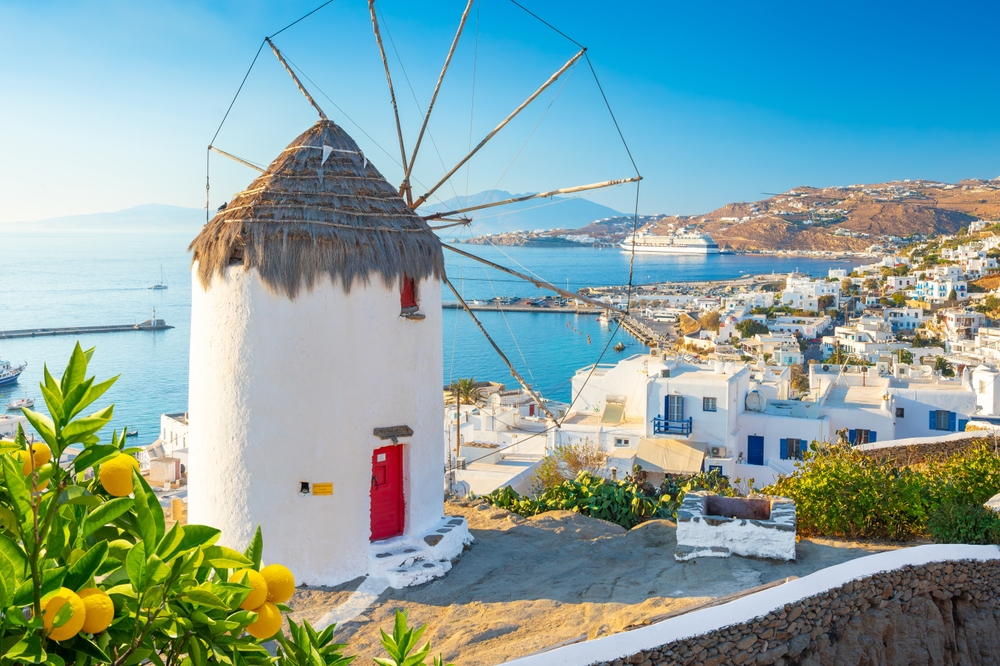
Northern Grèce and Epirus cover the northwestern quarter of the country, between the Albanian border, Greek Macedonia and the Ambracian Gulf. This is continental Grèce, mountainous, crossed by the Pindus massif, several of whose peaks exceed 2,600 meters. The landscapes bear no resemblance to the postcards of the Cyclades: beech forests, highland pastures, trout-filled rivers, stone villages with slate roofs. We recommend this region to travelers who wish to understand another side of the country, that of the Sarakatsani and Vlach shepherds, Orthodox monasteries and mountain cuisines.
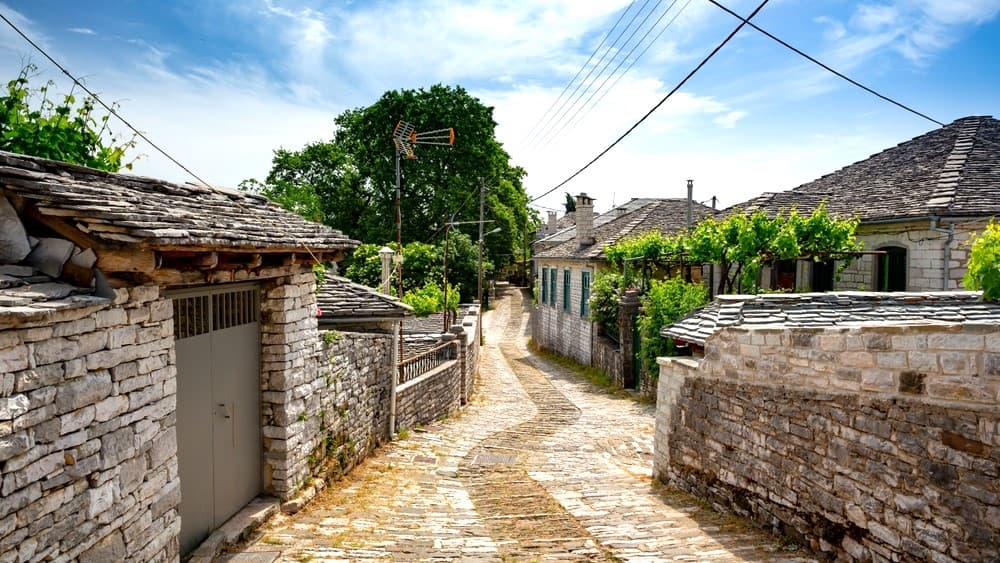
Epirus, centered around Ioannina, preserves a strong identity inherited from four centuries of Ottoman administration and the semi-autonomous principality of Ali Pasha in the early nineteenth century. Ioannina, perched on its lake at 470 meters altitude, retains its fortified old town, the Aslan Pasha mosque converted into a museum, and the island of Nissi reached by boat in ten minutes. Further north, the 46 villages of the Zagoria region (Zagori area) are scattered between 700 and 1,400 meters. Papingo, Monodendri, Vitsa, Aristi, Tsepelovo: each has its own church, dry-stone single-arch bridges, paved alleys. The Vikos Gorge, 900 meters deep and 12 kilometers long, can be crossed in a day's hike between Monodendri and Vikos village, including both descent and ascent.
Further east, the Thessalian plain opens abruptly onto the Meteora, six still-active monasteries perched on gray sandstone peaks, 300 meters above Kalambaka. Built in the fourteenth and sixteenth centuries to escape Ottoman raids, they can be visited in two days—ideally one day by car for the six access points, a second day on foot via the ancient monastic trails. We recommend staying on site rather than taking an excursion from Athens: the late afternoon light and sunrise make all the difference to the experience.
Thessaloniki, the country's second city with 800,000 inhabitants in the metropolitan area, closes the itinerary to the east. A Byzantine then Ottoman capital, refuge for Sephardic Jews expelled from Spain in 1492, it preserves a dozen Early Christian churches on the UNESCO World Heritage list, a 5-kilometer waterfront between the White Tower and the port, and a gastronomic scene we consider superior to that of Athens. The Kapani market, breakfast bougatsa, and mezze based on Florina red peppers and Drama feta cheese are worth two nights on their own.
Epirote cuisine also sets itself apart from the south: little or no fish, but rather savory pies with cheese and herbs (pites), roasted lamb, wild mushrooms, river trout. Tsipouro, a local grape-marc spirit, replaces ouzo. In Metsovo, a former Vlach stronghold at 1,160 meters altitude, aged cheeses and Katogi wine are tasted in tavernas heated by wood stoves until April. This density of experiences across a restricted territory—roughly 400 kilometers east to west—justifies a 7-10 day driving circuit according to our local team, as a complement to or alternative to the islands.
To Discover
The six Meteora monasteries. Two days suffice from Kalambaka, alternating scenic drives and monastic trails. Megalo Meteoro and Varlaam for their architecture, Roussanou and Agia Triada for their position on narrow peaks.
Crossing the Vikos Gorge. Six to seven hours of hiking between Monodendri and Vikos village, 900 meters of depth, rocky terrain best practiced between May and October. We always arrange return transportation.
Ioannina and its lake. The fortified old town, the boat crossing to the island of Nissi and its five monasteries, and the Ali Pasha museum in the former Aslan Pasha mosque make up a complete day.
Thessaloniki gastronomic experience. Kapani market in the morning, mezze in the Ladadika quarter in the evening, cream bougatsa on the way out. Minimum two nights for the city, its Byzantine churches and waterfront.
The Zagori stone villages. Papingo, Aristi, Vitsa, Tsepelovo: slate architecture, Ottoman single-arch bridges, family inns in former mansions. Ideal base for three to four days of hiking.
When to Go
The useful season runs from May to mid-October. May and June offer flowering meadows at altitude, still-vigorous rivers and temperatures of 22 to 27°C in the plains, 15 to 20°C in the Zagori. July and August remain more pleasant than the south, around 28 to 30°C in Ioannina and Thessaloniki, 22 to 25°C in mountain villages above 1,000 meters. September and early October are our preferred period for hiking: stable skies, forests taking on their colors starting October 10th in the Pindus.
From November to March, the continental climate sets in: frequent snow above 800 meters, negative temperatures at night in the Zagori, some secondary roads closed. The Meteora can be visited year-round but require warm clothing between December and February, with mornings around 0-5°C. April remains rainy, roughly 80mm over the month, and several mountain refuges don't open until mid-May.
Practical Tips
We recommend a minimum of seven days for a coherent circuit, ten days to include hiking and time in Thessaloniki. The most logical entry is via Thessaloniki airport, better served than Ioannina and closer to the Meteora (230 km, 2.5 hours by road). A rental car is essential: distances between Zagori villages are short but roads are winding, allow 1 hour per 40 km in the mountains. The natural combination is with Attica and Athens at the beginning or end of your trip, via a one-hour domestic flight, or by road toward the Peloponnese via the Rio-Antirio bridge.
The comfort level is good: character inns in the Zagori, 4-star hotels in Ioannina and Thessaloniki, restored traditional houses in Kalambaka. This region suits hikers, travelers interested in Orthodoxy and Ottoman history, and regional cuisine enthusiasts. For families with young children, we adapt hiking stages and favor accommodations with gardens. This is not a beach destination: the beaches of Epirus (Parga, Sivota) exist but remain secondary to the neighboring Ionian islands.