Cyclades
Twenty inhabited islands in the Aegean Sea, from the marble of Tinos to the volcanic rocks of Milos, to be combined—two or three at most—over 10 days to capture their distinct characters.
The Cyclades form an archipelago of around thirty main islands in the Aegean Sea, some twenty of which are permanently inhabited. The name comes from the ancient Greek kyklos, meaning circle, as the ancients saw these islands arranged around the sanctuary of Apollo at Delos. To this day, this geographical logic structures maritime connections departing from Piraeus and Rafina, the two ports of Athens that we use depending on your arrival island.
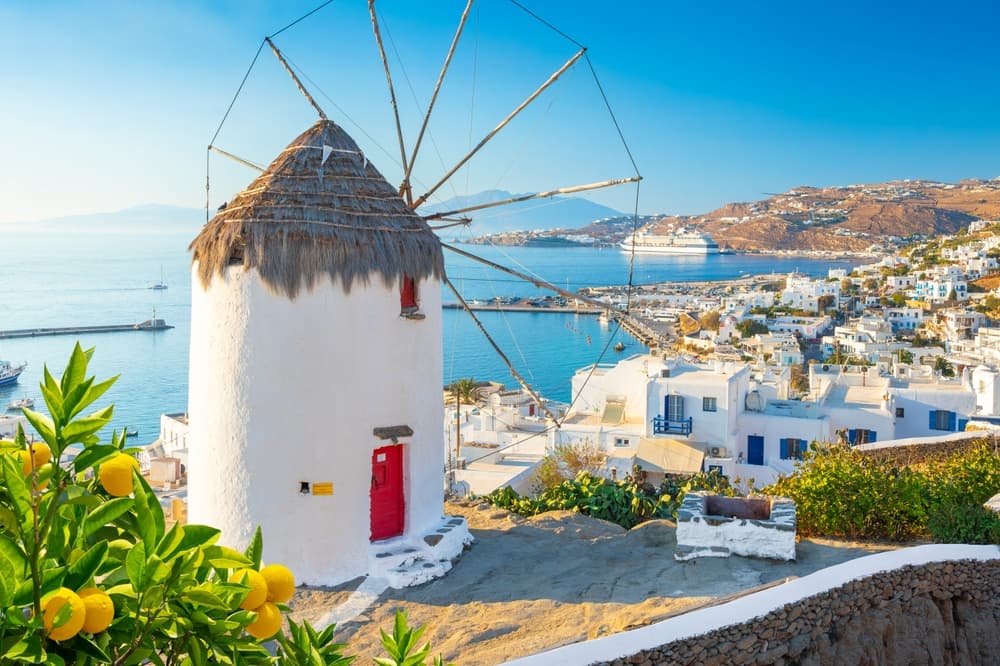
Each island has its own character, and that is precisely what we want our travelers to understand before booking. Santorini is the caldera of a volcanic eruption that occurred 3,600 years ago, with its white villages clinging to clifftops 300 meters above the sea at Oia and Fira. Mykonos is defined by persistent winds, the mills of Kato Mili, and dense nightlife from June through September. But Naxos, the largest in the archipelago, offers interior mountains peaking at 1,001 meters at Mount Zas, marble villages like Apiranthos and Filoti, and fine sandy beaches along the western coast. Paros, its neighbor, maintains a balance between tourism and local life, with Naoussa and its still-active fishing harbor.
Further west, Milos presents a mineral landscape born of its volcanic past: the white rocks of Sarakiniko sculpted by erosion, the colorful fishermen's houses of Klima built right at the water's edge, and nearly 70 beaches, many accessible only by boat. Folegandros nearby offers another option: a single road, a Chora perched on a 200-meter cliff, few hotels, and the pace of those who walk. Sifnos is known throughout the country for its cuisine, particularly revithada, a chickpea dish cooked in wood-fired ovens in earthenware vessels on Sundays.
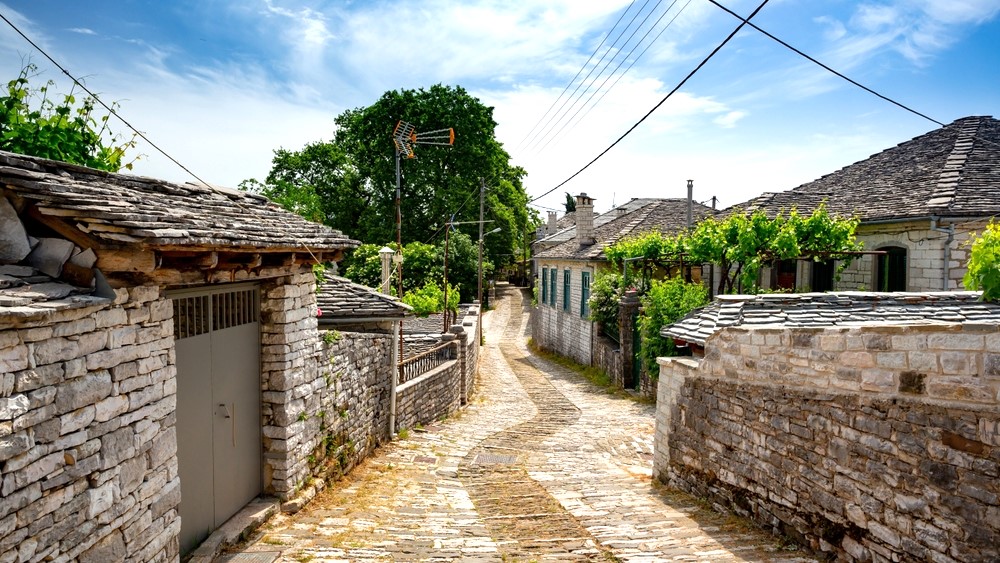
Tinos has a different profile altogether. An Orthodox pilgrimage island centered on the church of Panagia Evangelistria, it hosts a living tradition of marble sculpture in the villages of Pyrgos and Volax, where workshops remain open to visitors. Andros, greener in aspect, features a network of marked trails spanning more than 100 kilometers, making it one of the few archipelago islands designed with hiking in mind. Syros, the administrative capital of the Cyclades, retains nineteenth-century neoclassical architecture in its capital Ermoupoli, a testament to an era when the port rivaled Piraeus itself.
The climate is dry and windy. The meltem, a north-northwesterly wind that blows from mid-July through late August, can reach 7 to 8 on the Beaufort scale for several consecutive days. In practical terms, this means fast ferries are canceled, sometimes even the large Blue Star vessels on the most exposed routes, and windward beaches become unusable. We always build in a 24-hour buffer before international flights departing from Athens, and we favor conventional ferries over hydrofoils for travelers sensitive to motion.
The economy today relies largely on summer tourism, but fishing, wine production (Santorini's assyrtiko, the moschofilero from a few Paros parcels), cheeses (Naxos graviera, fresh goat cheese from Sifnos), and some goat herding continue to structure life beyond the season. This strong seasonality is what one must understand: in May and October, certain family-run restaurants and hotels close on smaller islands, yet villages regain a local life that vanishes in July-August.
To discover
Sarakiniko and the Milos coastline by boat. Spend a day renting a caïque from Adamas to reach Kleftiko and its limestone arches, accessible only by sea. Sarakiniko itself is reached on foot: a landscape of white rock polished by wind, comparable to a lunar flow.
Hiking among marble villages in Naxos. A mule track connects Apiranthos to Filoti in 3 hours through the olive groves of Mount Zas. The houses of Apiranthos are built in local marble and elders still speak a dialect tinged with Cretan, a heritage from eighteenth-century migration.
Sculptors' workshops in Pyrgos, Tinos. The village is home to a marble sculpture school founded in 1955 and several open studios. The central fountain, door lintels, and even cemeteries bear witness to a continuous tradition since the eighteenth century.
Sunset at Oia, Santorini, out of season. In May or October, the western terraces of Oia remain frequented but breathable. Light falls across the caldera and the volcanic island of Nea Kameni opposite, still geologically active.
Delos, sanctuary of Apollo. An uninhabited island classified by UNESCO, reachable in 30 minutes by caïque from Mykonos. You walk among the mosaics of the House of Dolphins and the Terrace of Lions from the seventh century BCE, across a 5 km² archaeological site.
When to go
We recommend two windows: mid-May through late June, and mid-September through mid-October. Temperatures then range between 22 and 28°C during the day, the water reaches 20 to 23°C in June and holds around 23°C in October. Ferries operate normally, the meltem is weak, and villages maintain local activity. July and August bring temperatures of 28 to 33°C, a sustained meltem (40 to 60 km/h several days per week) that makes certain fast connections uncertain, and peak attendance at Santorini, Mykonos, and Paros where circulation without reservations becomes difficult.
From November to March, many hotels and restaurants close on secondary islands (Folegandros, Sifnos, Koufonissi). Only Syros, Naxos, and Paros maintain full winter activity. Rains concentrate from December to February, roughly 60 to 80 mm per month, and certain maritime connections are suspended in rough seas. April remains fragile: water still cold at 17°C, but landscapes richly flowered, especially on Sifnos and Folegandros.
Practical advice
Plan for a minimum of 10 days to combine two or three islands without rushing, incorporating ferry times (2 to 5 hours depending on connections). Over 7 days, we suggest a single island plus an excursion—for example, Naxos with a day in the Small Cyclades. The entry point is Athens: we guide you to Piraeus port for Blue Star Ferries (more stable, more economical) or Rafina for rapid SeaJets depending on your island. Santorini and Mykonos also have direct airports from several European capitals in season.
The Cyclades combine well with Attica at the beginning or end of your journey (2 to 3 days in Athens), and with Crete for those wishing to extend by ferry from Santorini (2 hours to Heraklion). Combination with the Peloponnese is possible but requires returning through Piraeus. The Ionian Islands, to the west, do not fit logistically with the Cyclades: you must traverse the entire country. Hotel comfort is high on Santorini, Mykonos, and Paros, more family-oriented on Naxos, Sifnos, and Tinos, deliberately minimalist on Folegandros and the Small Cyclades. This is a destination suited to contemplatives, hikers on Naxos, Andros, and Sifnos, and families on Paros and Milos. Travelers seeking quiet should avoid Santorini and Mykonos between July 15 and August 25.